




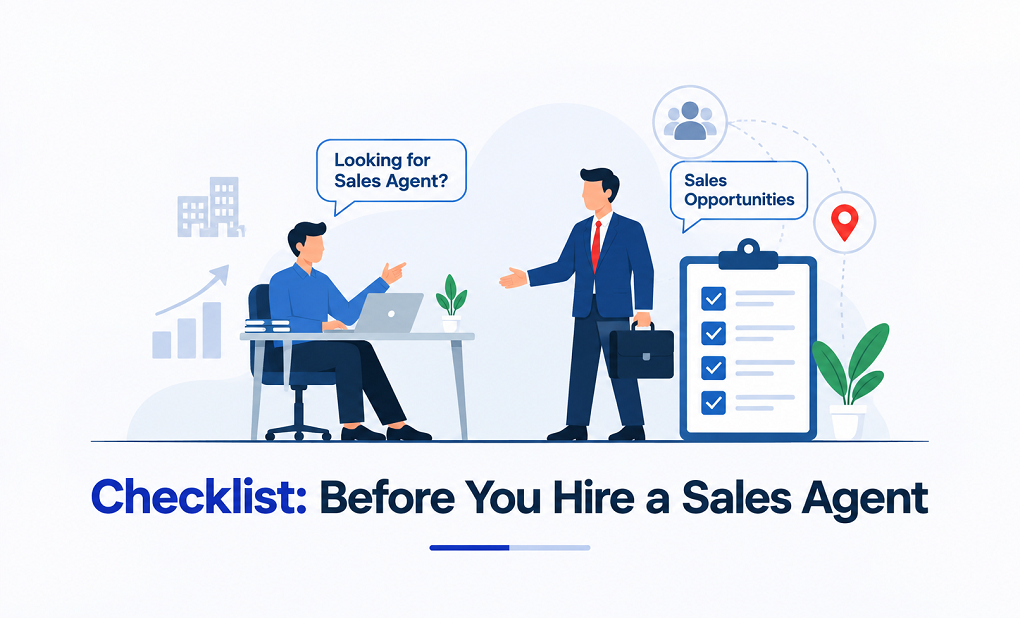
Hiring a sales professional is often treated as a quick operational requirement, especially when businesses are under pressure to improve revenue or expand into new markets. In reality, the process deserves far more attention. A sales hire directly influences customer communication, brand perception, lead quality, and long-term business relationships.
The right Sales Agent can strengthen business development efforts significantly. The wrong one may create inconsistent communication, poor client handling, and unnecessary financial loss. This is why businesses should approach sales hiring with the same level of evaluation they would use for any critical leadership or operational role.
Before making a final decision, there are several practical areas companies should assess carefully.
Define the Exact Purpose of the Role
One common mistake businesses make is hiring before clearly understanding what they actually expect from the position.
Sales responsibilities vary widely depending on the business model. Some companies need professionals focused on lead generation, while others require relationship-driven account management or direct closing capabilities.
Before hiring a Sales Agent, businesses should clarify the following:
- Whether the role is field-based or remote
- If the focus is on inbound or outbound sales
- Whether the sales process is B2B or B2C
- Expected sales targets and timelines
- Territory or market responsibilities
Clear expectations generally lead to better hiring decisions and smoother onboarding later.
Look Beyond Confidence During Interviews
Strong communication matters in sales, but confidence alone should never be mistaken for capability.
Many candidates interview well but struggle with consistency once actual client interaction begins. Businesses should therefore evaluate communication quality in a more practical way.
A professional Sales Agent should demonstrate the following:
- Clear explanation skills
- Structured conversation ability
- Listening capability
- Professional objection handling
- Patience during discussions
How a candidate communicates often reveals more than what is written on a resume.
Evaluate Industry Familiarity
Sales methods differ from one sector to another. Someone experienced in retail sales may not automatically understand enterprise software sales or industrial business development.
Industry understanding becomes valuable because it helps the salesperson communicate more effectively with potential clients.
Businesses should try to assess the following:
- Familiarity with the target market
- Understanding of customer behaviour
- Awareness of industry terminology
- Knowledge of competitor positioning
- Experience with similar sales cycles
A Sales Agent who already understands the business environment usually adapts faster.
Ask About Previous Sales Processes
Instead of asking only about targets achieved, businesses should understand how previous results were achieved.
Useful discussion points may include:
- Lead generation methods
- Follow-up structure
- Client retention approach
- Sales reporting habits
- Negotiation handling
This provides better insight into the candidate’s actual working process rather than only numerical performance claims.
Check Adaptability and Learning Ability
Sales environments rarely remain static. Markets shift, customer expectations change, and products evolve continuously.
Businesses should evaluate whether the Sales Agent can adapt to:
- New product categories
- Different customer segments
- Changing sales tools
- Updated communication methods
- Market competition
Adaptability often becomes more valuable over time than short-term sales experience alone.
Technical Familiarity Is Increasingly Important
Modern sales operations rely heavily on digital systems. CRM platforms, reporting tools, online meetings, and lead management software are now part of regular workflow in many organisations.
Before hiring, businesses should understand whether the candidate is comfortable with:
- CRM systems
- Digital reporting
- Virtual communication tools
- Email-based follow-ups
- Online lead tracking platforms
A digitally comfortable Sales Agent usually integrates more smoothly into structured sales operations.
Understand Their Approach to Client Relationships
Long-term business growth often depends on relationship quality rather than one-time conversions.
A good sales professional should know how to maintain trust with customers even after the sale is completed.
Businesses should pay attention to:
- How candidates describe customer handling
- Their follow-up practices
- Whether they focus only on targets or relationship building
- Their approach to difficult conversations
Relationship-focused sales professionals often contribute more consistently to business stability.
Clarify Internal Expectations Early
Many hiring issues arise because expectations are discussed too late.
Before onboarding a Sales Agent, companies should clearly define the following:
- Reporting structure
- Performance review process
- Incentive systems
- Sales targets
- Communication expectations
- Territory responsibilities
Professional clarity usually reduces future misunderstandings and operational friction.
Consider Long-Term Compatibility
Skill is important, but long-term compatibility with the organisation also matters.
The ideal candidate should align reasonably well with:
- Company communication style
- Team coordination methods
- Work culture
- Customer handling standards
Sales professionals work closely with both clients and internal departments, so collaboration ability should not be ignored.
Warning Signs Businesses Should Notice
Certain patterns during interviews may indicate future performance concerns.
Some common warning signs include:
- Inconsistent communication
- Vague explanations about previous roles
- Lack of preparation
- Overpromising without examples
- Poor understanding of customer interaction
Careful evaluation during the hiring stage usually prevents larger issues later.
Hiring a sales professional should never be treated as a rushed administrative task. The quality of a Sales Agent directly affects customer interaction, business development, and long-term growth potential.
Businesses that invest time in evaluating communication ability, industry understanding, adaptability, professionalism, and relationship management are generally more likely to build stronger sales teams over time.
For organisations looking to simplify sales recruitment and connect with experienced professionals more efficiently, AgentsAt offers a focused platform built to support smarter and more structured sales hiring decisions.